

Botox for Eye Wrinkles in New Braunfels, TX: Crow’s Feet or Under-Eye Lines?
Wrinkles around the eyes can form for several reasons, which is why Botox for eye wrinkles involves evaluating the location and timing of the lines. Crow’s feet located on the outside corner of the eyes are primarily attributed to movement of the muscles caused by smiling or squinting, while the lines under the eyes may be a result of thinner skin, loss of collagen, exposure to the sun, changes in volume or anatomy of the lower eyelids.
Botox is FDA-approved for lateral canthal lines, commonly referred to as crow’s feet. At StrIVe IV and Wellness, our goal is not simply to remove every line, but to determine whether reducing muscle activity is appropriate or whether another approach may better address the underlying concern.
Eye Wrinkles First Need to Be Separated by Location
When patients say they want Botox around the eyes, they might actually mean one of a few concerns:
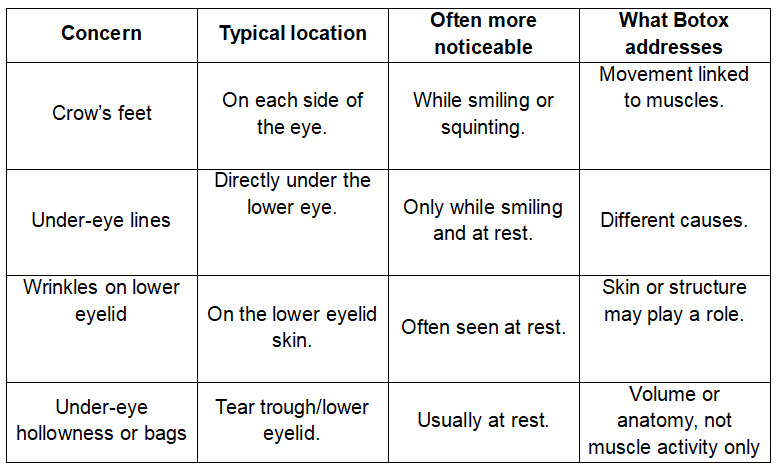
So, the first question should be where the lines come from and what causes them. Incorrect treatment of the area might result in little improvement while creating unnecessary weakening of the muscles.
Crow’s Feet Sit Outside the Eyes and Usually Show with Smiling or Squinting
The wrinkles commonly known as crow's feet develop from the outer corners of the eye. They can often be seen more clearly whenever one smiles or squints as a result of the movement of the orbicularis oculi muscle.
Due to the heavy influence of muscle activity, crow's feet Botox can produce a temporary effect that reduces crow’s feet but still allows a degree of natural expression.
Under-Eye Lines Sit Below the Lower Lid and May Have Different Causes
Lines that develop under the eyes are found below the lower eyelids and can be caused by structural changes in the eye as well as facial movements. A combination of decreased skin thickness, lack of collagen, sun exposure effects, less hollowness of the eye, and its anatomy can determine how noticeable these lines are.
This is the reason why under-eye Botox shouldn’t be considered the same as treatment for crow’s feet. Relaxing muscles can be helpful with certain dynamic lines but won’t suffice to eliminate all the reasons for under-eye aging.
Movement Lines vs Resting Lines: The Main Botox Decision Point
The important difference to bear in mind is whether the wrinkles are more related to facial motion or whether they become detectable only at rest.
Botox around the eyes is usually better suited for dynamic wrinkles because it reduces the muscle activity that contributes to wrinkle formation. You may recognize your wrinkles based on the following clues:
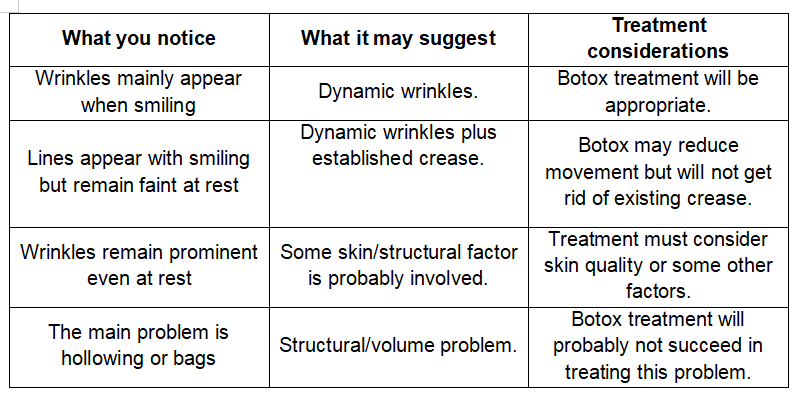
Therefore, an in-person evaluation of your skin could be more useful than relying solely on the location of the wrinkle.
When Botox for Eye Wrinkles May Fit Crow’s Feet Better Than Under-Eye Lines
When crow’s feet are located at the outer part of the eye and become visible only when smiling and/or squinting, crow’s feet Botox may provide a simpler solution than other techniques. In fact, even the FDA recognizes this as a cosmetic use of Botox.
At StrIVe IV and Wellness, during the consultation process, we take into account the movement of the facial muscles, anatomical features, and goals for treatment and determine if a neuromodulator meets the needs of the patient.
When Under-Eye Botox May Not Be the Right First Choice
If the primary issue relates to hollowness underneath the eyes, the presence of bags, sagging skin, or fine lines that remain at rest, Botox may not fix this underlying problem. A practitioner may have to assess other factors like skin quality, volume, and other anatomical factors in this kind of situation.
At StrIVe IV and Wellness, we offer aesthetic procedures like the Rejuvapen microneedling with PRP, which improves the production of collagen and helps with changing the texture of the skin. The precise treatment would depend on the specific concern of the patient.
What Can Happen When Eye-Area Botox Is Placed Too Aggressively
Eye muscles play a significant role in eyelid movement and facial expression. Excessive weakening or unintended spread of Botox can result in the temporary side effects of sagging eyelids or brow, asymmetries, and changes in facial movements.
This is why effective Botox around the eyes treatment is not all about using more of it; but about making sure that the injections are done in the right locations at the correct dose, in line with the anatomy of the muscles, and do not interfere too much with expressions.
When Eye Wrinkles Need Skin Quality Treatment Instead of More Relaxation
When the muscles are fully relaxed, the presence of lines on the face may indicate that the mere reduction of the facial muscles' activity may not be sufficient. Wrinkles may still persist despite the treatment with neuromodulators due to factors such as the lack of collagen, overexposure to the sun, loss of skin elasticity, and the presence of skin creases.
In these situations, there’s no point in resorting to a continuous increase in Botox dosage. The decision must come after having thoroughly analyzed the cause of the visible wrinkles.
Botox for Eye Wrinkles at StrIVe IV and Wellness in New Braunfels, TX
At StrIVe IV and Wellness, we evaluate Botox for eye wrinkles according to the location of the lines, facial expressions, muscle activity, skin quality, and treatment goals. During your consultation, we identify dynamic crow's feet or under-eye lines that might be caused by other issues with the skin or structure. This helps us choose whether crow’s feet Botox, Botox around the eyes, or some other aesthetic procedure is more appropriate.
Our goal is controlled muscle relaxation. We use Botox, Dysport, and Xeomin, and consider the facial anatomy as well as the degree of movement to obtain a natural look.
Call (830) 730-0279 or visit us at 1260 River Acres Drive, New Braunfels, TX 78130 to learn more.
FAQs
Can Botox help wrinkles around the eyes?
Absolutely. Botox is FDA-approved for crow’s feet, or lateral canthal lines around the eye area. It decreases targeted muscle movement temporarily.
How do I know if my eye wrinkles are crow’s feet or under-eye lines?
Crow’s feet are found on the outer edges of the eye, and under-eye lines are found underneath the lower eyelid. Also, how they behave in smiles as well as in a resting position can help differentiate between the two.
Is Botox better for crow’s feet than under-eye wrinkles?
Crow’s feet are a known indication covered by the FDA, while under-eye lines may have various causes, and that is why the use of under-eye Botox will depend on the specific case.
Can Botox be used under the eyes?
Yes, Botox can be suggested in some cases, although the lower eyelid area results should be carefully evaluated, as not all under-eye concerns are caused by muscle activity.
Why are under-eye lines harder to treat with Botox?
Skin thickness, elasticity, volume, muscle activity, and the structure of the area under the eyes all contribute to the low success rate of Botox. Botox’s main action is to address muscle contraction. It doesn’t treat every underlying cause.
Can Botox around the eyes change my smile?
The movement of the muscles in the face can be impacted when Botox is injected near the eyes. With a proper approach to dosage and placement during the procedure, the patient’s expression should remain unchanged.
Will crow’s feet Botox still look natural?
Natural Botox results in the eyes almost always have a connection to the reduction of excessive movements instead of their complete removal. Injections need to be administered according to the patient’s desired level of expression.
Can Botox help eye wrinkles that stay when I am not smiling?
Injections may soften the underlying cause related to muscle movement. However, the presence of lines when at rest can also be a result of changes in the skin and tissues beneath it. Therefore, Botox injections may not be a complete solution to the problem.