

Laser Hair Removal for Ingrown Hairs in New Braunfels, TX
If repeated shaving or waxing causes bumps, you should consider laser hair removal for ingrown hairs, as it can help minimize the incidence of ingrown hairs. Ingrown hairs occur when hair ends up curling back into the skin, and repeated shaving could lead to razor bumps and irritation. The American Academy of Dermatology (AAD) recommends laser hair removal for those suffering from razor burns and ingrown hairs due to shaving.
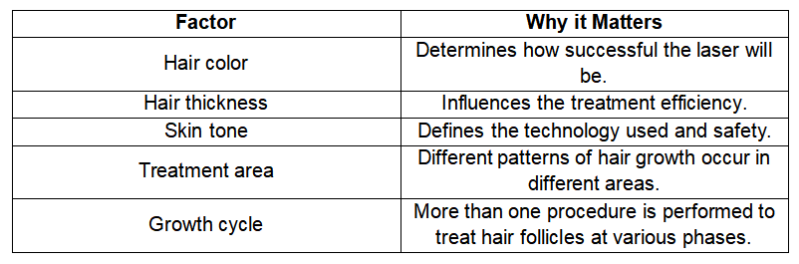
At StrIVe IV and Wellness, laser hair removal is done in the underarms, bikini and Brazilian area, face, legs, arms, chest, and back. The treatment planning is determined by the area of treatment, hair color and type, skin type, the number of sessions expected, and realistic results.
Laser Hair Removal for Ingrown Hairs: When Shaving Keeps Causing Bumps
Shaving only removes hair at the level of the skin, and the hair continues to grow from the hair follicle. In the case of coarse or curly hair, the hair may curve into the skin and cause the issue of ingrown hair and razor bumps. Frequent shaving may contribute to the cycle of irritation.
Laser treatment acts on the pigment in the hair and may damage the hair follicle, which means that hair will regrow finer and less. Thus, some patients will have less hair to shave and will thus have fewer bumps and irritation from shaving procedures.
Why Razor Bumps and Ingrown Hairs Keep Returning After Hair Removal
Both shaving and waxing methods for removing hair only provide temporary results, and hair growth will continue after using either technique. In the event that regrowing hair is cut short, or if it curls back into the skin, an ingrown hair can form again. This is particularly problematic when people must take care of their hair regularly.
However, laser treatment focuses on the hair follicle rather than cutting or removing the hair each time. There's no promise that this technique will remove all ingrown hair, but it will reduce the amount of hair regrowth that leads to it.
Bikini Ingrown Hairs, Underarm Bumps, and Other High-Friction Areas
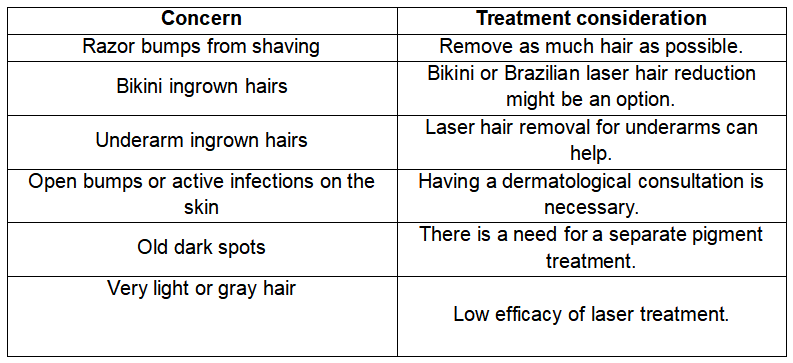
Laser hair removal is frequently an option for the bikini line and underarm area, as these areas are often irritated due to constant shaving. At StrIVe IV and Wellness, we specify the Brazilian area, bikini line, and underarm as laser treatment areas since they have proven to provide fewer ingrown hairs and constant shaving irritation.
In most cases, patients who have recurring bikini ingrown hairs or underarm ingrown hairs aim for long-term reduction in hair follicles instead of smoother skin after one visit. The AAD confirms that the bikini area or underarms can truly be treated with laser hair removal methods.
When Laser Hair Removal May Help Reduce Future Ingrown Hairs
People suffering from frequent ingrown hairs often find laser hair removal helpful when shaving is the continual cause of these ingrown hairs. Over the course of the treatment, as the hair becomes thinner and less dense, patients have to shave less frequently, which can help reduce irritation and the appearance of bumps.
Results depend on hair color, thickness, skin tone, treatment area, and the laser used. The darker the hair, the better the target because lasers depend on pigment.
Active Irritation, Infection, or Open Bumps Should Be Checked Before Treatment
Not every bump is necessarily an ingrown hair. Observing any significant redness, pain, pus discharge, open sores, or possible infections should make you seek a proper evaluation before deciding on the laser procedure.
At StrIVe IV and Wellness, the characteristics of the skin and the hair type are studied in order to provide treatment according to the specific condition. If there’s any irritation in the skin, the optimal time for treatment should be figured out during consultations.
Why Ingrown-Hair Improvement Usually Takes a Series of Laser Sessions
There are various phases of hair growth; thus, one treatment can’t work on all hair follicles. According to AAD, patients usually require more than one treatment with intervals of about 4 – 6 weeks between them, depending on the patient and the treated area.
At StrIVe IV and Wellness, we always educate our clients that significant hair removal occurs through a series of treatments rather than a single session. The number of sessions necessary largely depends on the treatment area, characteristics of the hair, as well as the patient’s response to treatment.
Between Laser Sessions: Managing Bumps, Shedding, and Skin Sensitivity
It is possible to experience some temporary redness, swelling, and sensitivity after the treatment, but this usually subsides in a few days. The AAD suggests that treated skin stays protected from sun exposure and strongly recommends that patients follow their provider’s post-treatment instructions.
Shaving is the most preferred method between sessions for hair removal, whereas waxing and plucking are generally not recommended as they remove the hair from the follicles instead. Always follow the pre- and post-treatment guidelines that we provide at StrIVe IV and Wellness for the best results.
Dark Spots from Old Ingrown Hairs May Need a Separate Skin Plan
Repeated incidences of ingrown hairs can leave behind dark marks once the inflammation subsides. Prevention of future hair growth may be a way to avoid future marks, but the main focus of laser hair removal is on removing hair follicles, not skin pigmentation.
In case the issue of discoloration is a serious one, a separate assessment and treatment plan may be required. Sun protection also plays a big role since skin can be more sensitive and can even change color for some time or persistently after a laser treatment.
Ingrown Hair and Laser Hair Removal Assessment at StrIVe IV and Wellness in New Braunfels, TX
At StrIVe IV and Wellness, our founder, Jeffrey Money has more than 25 years of experience in family and emergency medicine with a specialized focus on trauma, including work in Level I and Level II trauma centers. Due to his clinical background, the evaluation of patients suffering from razor bumps, bikini ingrown hairs, and underarm ingrown hairs can be effective, as the treatment plan will not be limited to just choosing a laser. The choice of laser for the ingrown hairs will generally depend on various factors, such as the patient’s medical history, skin condition, hair characteristics, treatment area, and irritation.
We examine the area to be treated with laser hair removal and determine the approach for the treatment based on the patient’s condition, hair growth pattern, previous shaving or waxing, and sensitivity of the skin.
If you want to get laser hair removal in New Braunfels, TX, or learn more about the procedure, then contact StrIVe IV and Wellness at (830) 730-0279 or visit us at 1260 River Acres Drive, New Braunfels, TX 78130. You can also book your appointment online.
Quick Decision Guide
FAQs
Can laser hair removal help ingrown hairs?
Yes. By decreasing hair follicles, the procedure limits shaving and also decreases the formation of ingrown hairs.
Is laser hair removal good for razor bumps?
Laser technology can work if razor bumps are tied to continual shaving and hair regrowth.
Can laser hair removal help bikini ingrown hairs?
Yes. Treating the bikini area can reduce hair growth and the necessity for frequent shaving.
Can laser hair removal help underarm ingrown hairs?
Yes. It can impact the amount of underarm hair and ensure less irritation and fewer underarm ingrown hairs.
Should I get laser if I have active ingrown bumps?
The presence of serious inflammation, open skin, or suspected infection should be properly assessed before the procedure.
Do I need to shave before laser hair removal?
Generally, yes, as shaving helps to keep the hair in its follicle for the laser to do its work. Always follow the instructions provided by your provider.
Can I wax between laser hair removal sessions?
Generally, no, as waxing removes hair from its follicle. Shaving is more advised for any interval between laser treatments.
How many laser sessions are needed for ingrown hairs?
In a majority of cases, multiple treatments are required, since follicles are at different stages of hair growth. The AAD states that treatments should be repeated every 4 – 6 weeks.
Will laser hair removal remove dark spots from old ingrown hairs?
No, because laser hair removal is focused on hair follicles. Dark marks may require a separate treatment plan to be cleared.